In this 3-part blog series, I will attempt to demystify popular misconceptions related to fostering a purpose-driven workforce. The first post in the series examined the fallacy that organizational purpose is equivalent to environmental sustainability, corporate social responsibility, and other noble causes. In the second installment, I revealed the difference between employees’ life purpose and their purpose at work. And in this final post in the series, I will clarify the distinction between the organization’s mission, vision, or purpose and the higher purpose of one’s specific job role.
In my years of studying organizational purpose, I have found no evidence that companies acknowledge the difference between the higher purpose of the organization and the higher purpose of individual job roles in support of organizational purpose. This is a glaring oversight and a missed opportunity to engage employees by connecting job roles at all levels of the company to organizational purpose.
Now, in some cases, an organization’s purpose applies to every job role in the company. The hotel company Hyatt comes to mind. Its purpose statement reads: “To care for people so they can be their best.” This applies to everyone’s job role, whether they are a housekeeper, front desk agent, restaurant server, maintenance engineer, or general manager. But Hyatt is the exception.
Most organizations (assuming they have articulated one) offer a sweeping purpose statement that is less relevant to the daily work assignments of its employees. Kroger’s organizational purpose, to feed the human spirit, may not resonate as the job purpose (i.e., the single highest priority of the employee and job role) for many Kroger job roles. Although noble, it is rather lofty and abstract and doesn’t pertain directly to the job role of, say, an employee whose responsibilities include sacking groceries, bringing carts inside the store from the parking lot, sweeping the floor, and cleaning the public restrooms.
If I were this employee’s supervisor, I would find it awkward to cajole him into cleaning a public restroom or mopping up a spill on aisle 10 by championing the rallying cry: “Feed the human spirit, Todd!”
In this case, it’s important to honor the organization’s purpose while adapting the job role’s purpose to one that is relevant to the role and will resonate with the employee. A closer look at Kroger’s corporate ideals reveals that this purpose is meant to accomplish its pledge “to be friendly and caring, provide everything fresh, to uplift every way, and improve every day.” Now we have something to work with.
I may submit that this employee’s job purpose, his single highest priority at work, is to provide everything fresh. As his supervisor, I might set the aspirational goal of “Provide everything fresh!” With that mantra as the standard, a dirty public restroom or allowing a spill on aisle 10 to linger is unacceptable. It puts a stake in the ground. It is Kroger’s line in the sand that no one dares breach. Doing so would not be tolerated by employees who have committed to provide everything fresh.
Consider your organization’s guiding statement, whether it’s referred to as a mission, vision, or purpose statement. How applicable is it to your job role or the job role of those you supervise? If it’s aligned 1:1, that means your company’s highest priority is congruent with that of the job roles required to fulfill it. That’s great. More likely there is dissonance between the two that will require honing a relevant job purpose in support of the organization’s purpose.
It’s not lost on me that some readers will be asking, “What’s the point of articulating a job role’s purpose? Isn’t this just a theoretical exercise with little or no application or benefit inside the real world of work?” That’s a question that, as you may have guessed, I’ve heard before. I’ll tackle it in my next post, this week or next.
So, this concludes the 3-Part series on misguided purpose examining the three popular misconceptions that undermine leaders’ attempts to develop a purpose-driven workforce: Part 1. organizational purpose is equivalent to environmental sustainability, corporate social responsibility, and other noble causes, Part 2. employees’ life purpose, ideally, is aligned with their purpose at work, and Part 3. organizational mission, vision, or purpose corresponds to the higher purpose of employees’ job role.
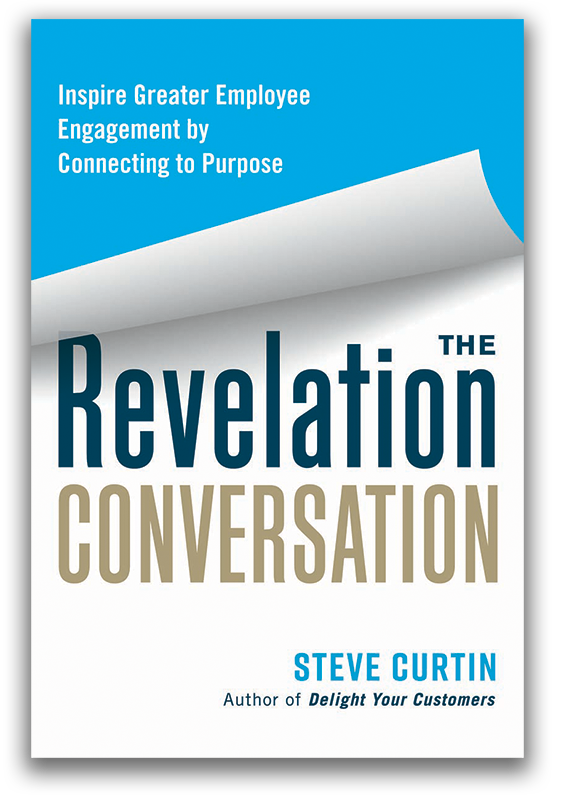
Thanks for reading. Explore this topic further in my latest book, The Revelation Conversation: Inspire Greater Employee Engagement by Connecting to Purpose.
Illustration by Aaron McKissen.