Posts Tagged ‘passives’

Coffee. Above all else. (Including customer service.)

Saturday, August 21st, 2010

I met a colleague at ink! Coffee in Denver last week. I appreciate great coffee as I’ve blogged about before and was really looking forward to trying ink!’s.

My first impression was positive as the barista welcomed me and briefly shared ink! Coffee’s philosophy regarding product quality and freshness.

After determining that I was meeting someone for coffee, she dispensed the coffee into a sturdy ceramic mug—which was refreshing. I took my first sip and was truly impressed with the quality. As advertised, it was rich, smooth and not at all bitter.

About twenty minutes into my appointment, the barista came by our table and mentioned to me that they offer free refills.

“Free refills?” I said. “That’s great! I’d love one. Thank you.”

Then she said something that shocked me.

“Oh…but I don’t get it for you. You have to go to the counter to get it.”

She then justified her response by explaining that we were a team and, as such, we all played different roles. Apparently, her role was to prepare and sell me a cup of coffee and my role was to pause my meeting, get up, go to the counter, and wait in line to request a refill.

ink! Coffee’s slogan is: Coffee. Above all else.

Clearly, this includes customer service.

In the men’s restroom, there is a sign boldly displayed which reads:

THE INK ON ink! COFFEE

In 1994, ink! started in Aspen, Colorado with one cart and a lot of passion. We continue to hand-roast our coffee at high elevation in the mountains which allows us to roast longer at a lower temperature making the coffee rich, smooth and never bitter.

Beans are delivered fresh to ink! stores, brewed into coffee, and served to adoring customers. And because we take pride in freshness, we only keep a pot of coffee around about as long as it took to brew it. Same goes for beans. We never stockpile them.

Our baristas have a passion for great coffee (without the attitude). And most importantly, they know how to make the perfect cup.

At least they’re consistent. This sign really does accurately capture the ink! Coffee culture that I experienced: A focus on coffee—not the customer. Notice the only reference to customers is in the second paragraph where we’re described as “adoring.”

I found this definition of “adoring” at Merriam-Webster.com: To worship or honor as a deity or as divine. In the context above, it would seem that customers are expected to “worship” ink! Coffee. That’s flawed. It’s reminiscent of American automakers’ attitude towards their customers until they began defecting to imported brands at an alarming rate. Only then did Detroit begin to refocus on customers.

In the third paragraph, it’s noted that “baristas have a passion for great coffee…And most importantly, they know how to make the perfect cup.” Both of these references have to do with ink!’s product, not service. In fact, there’s no mention of customer service anywhere—so I really shouldn’t have been at all surprised that the barista had no intention of refilling my cup of coffee for me.

I am a huge supporter of smaller, independent brands that compete against the behemoths and I want to see them succeed. That said, it’s unlikely for a coffee shop (or any other business) to succeed based on product quality alone. Service quality must be part of the equation.

If I were advising ink! Coffee, I would emphasize that its highest priority should be to create promoters of the ink! Coffee brand.

Global consulting firm Bain and Company defines promoters as those customers who are the least price-sensitive, have the highest repurchase rates, and are responsible for between 80 and 90 percent of positive referrals to a company or brand.

Promoters respond to the question, “How likely is it that you would recommend ink! Coffee to a friend or colleague?” by selecting 9 or 10 on a zero-to-10 scale with 10 indicating they are extremely likely to recommend.

Promoters recognize product quality and they expect a commensurate level of service quality. If customers get one without the other, they’re less likely to recommend the company or brand to others. And, by definition, they’re not promoters. They’re either passives (indifferent about your brand) or detractors (responsible for 80 to 90 percent of the negative word of mouth).

ink! Coffee has a great location in Cherry Creek and an amazing product. But the reality is that there is a Peet’s Coffee & Tea and a Starbucks located on the same street. And ink! simply will not succeed in creating promoters and growing market share by focusing exclusively on product quality while remaining indifferent about the customer experience.

The best is the enemy of the good

Monday, November 9th, 2009

VoltaireThe title of this post is a quote from the French philosopher, Voltaire. It expresses the notion that we must not accept that “good” performance is equivalent to “the best” performance—in fact, they’re enemies.

I’m convinced that most service providers are content to deliver “good” customer service. Their rationale may be based on the assumption that by meeting customers’ expectations, they will create satisfied customers.

Bain and Company, a consumer research firm, has a name for satisfied customers: passives. Passives, as the name implies, are satisfied but unenthusiastic customers who are easily wooed by the competition. These customers are disloyal, tending to make buying decisions based on convenience and price considerations—as opposed to brand loyalty.

Customers who are merely satisfied are generally the product of company cultures that reward efficiency, such as many fast food restaurant chains and big box retailers. These operations are process-focused, transactional, and pride themselves on product and service consistency from location to location.

Contrast the majority of service providers content to deliver “good” customer service with the rare exceptions that aspire to deliver “the best” customer service. Companies such as Disney, Zappos, Nordstrom, and Lexus come to mind.

Instead of attempting to meet customers’ expectations, these companies aspire to exceed expectations. Instead of producing merely satisfied customers, these companies create delighted customers!

Bain and Company has a name for delighted customers as well: promoters. Promoters are the least price-sensitive, have the highest repurchase rates, and are responsible for between 80 and 90 percent of positive referrals to a company or brand.

Promoters are the product of company cultures that reward excellence. These companies are customer-focused, experiential, and pride themselves in delivering product and service excellence from location to location.

Too many businesses accept that “good” (or, more realistically, adequate) customer service is good enough.

Is your business always the most convenient and least expensive option for the customers you serve? Is it ever? Is your company content to produce passive customers or would you prefer a legion of promoters? Is your company’s goal to be good or to be the best?

There is a clear difference between the two that yields predictable results. Voltaire observed this difference 200 years ago and your customers can see it today.

The ultimate question

Monday, December 15th, 2008

Most companies seek to lead their competitors in market share.  But alas there is usually only one company with the largest percentage of market share.  While there are many factors that contribute to gains in market share, some of them such as advertising and discounting are quite expensive to maintain.

Why not take advantage of the goodwill you have developed with your very best customers?  Bain and Company, a global consulting firm, identified these customers as promoters.  These customers are the least price-sensitive, have the highest repurchase rates, and are responsible for between 80 and 90 percent of positive referrals to your company or brand.

In addition to promoters, they also identified two other categories of customers: passives and detractors.  All three categories emerged from ratings customers gave to companies in response to the question, “How likely is it that you would recommend this company to a friend or colleague?”

Bain and Company research over a ten-year period confirms that, in most industries, companies with the highest ratio of promoters to detractors in their sector typically enjoy both strong profits and healthy growth.  Mmm…maybe there’s something to this customer service stuff after all.

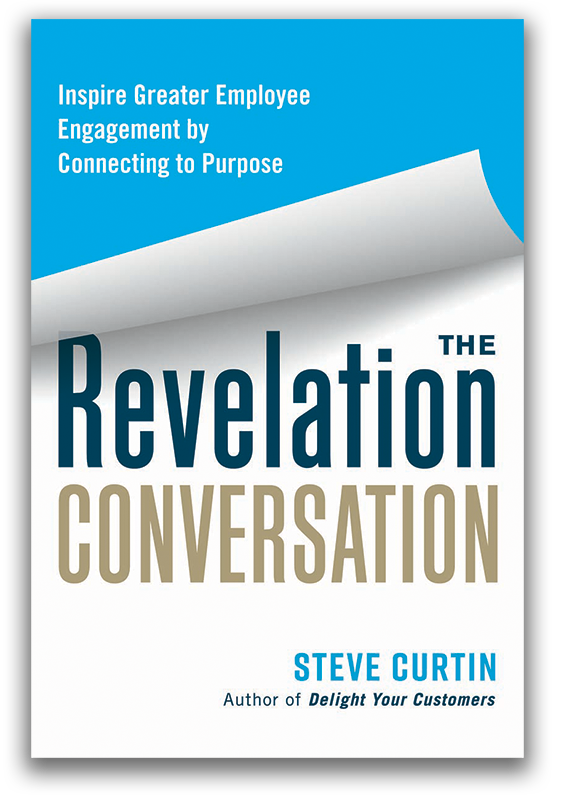
Interested in learning more?  Pick up the book.

Contact Steve

Begin generating enthusiasm for your customers today!

Phone
303.325.1375

Email
info@stevecurtin.com